Flash in a Dark Reception
A simple approach to balancing room atmosphere with a clean, useful burst of light.
Expose the room first
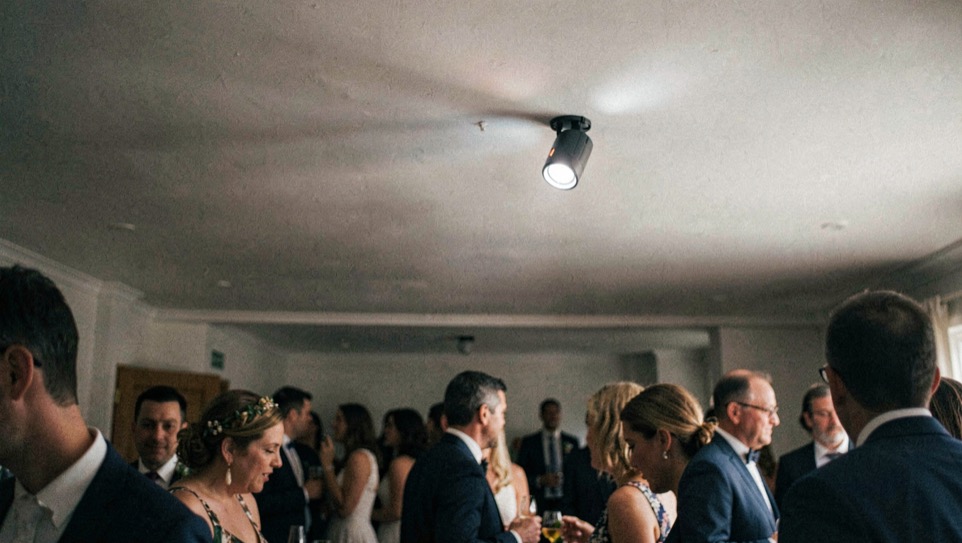
Make a test frame without flash so you know what the existing light is doing. Keep the room slightly under your preferred brightness rather than erasing its colour and depth.
Bounce from a surface you trust
A pale ceiling or wall can turn a small flash into a larger source. Check the direction of the shadow and the colour of the surface before committing to a sequence.
Keep the gesture intact
A flash burst should support the moment, not freeze every movement into the same look. Let a little ambient motion remain when it helps the dance floor or conversation feel alive.
Keep the room in the frame
Make an ambient test before the first burst. Note the colour of the room, the usable shutter speed and the direction in which people are moving. Then bounce from the largest pale surface available and make a second frame. Compare the shadow under the chin and the brightness of the background. If the room has coloured walls, a small direct flash with a diffuser may be more honest than a bounce that paints the face with an unwanted tint.
A common error is to let TTL or a powerful manual burst make every exposure look the same. The reception should retain variation: a little motion for the dance floor, a cleaner frame for a toast, and enough ambient colour to locate the people in the evening. Watch the recycle time and the temperature of the flash. A restrained sequence with a reliable battery is more useful than a dramatic test that fails before the important moment.
Keep a field record
Make a small sequence with the same person at three distances from the bounce surface. The exercise shows when the light begins to fall away and when the background becomes too dark to carry the room. It also teaches how quickly a moving event changes the calculation. Keep the frame that looks least “flashy” if it holds the gesture and place. The goal is not to prove a lighting trick. It is to make the viewer feel the room first and notice the technical support second.
Know the limit
The room may contain several kinds of darkness: a dim dance floor, a bright doorway and a table lit by candles. One flash position cannot solve all three. Choose the look for each transition and keep the change simple. If the ceiling is high or dark, bounce becomes inefficient and direct light may be the honest tool. Tell the story through exposure rather than through power. A little motion, a warm background and a sharp face can coexist when the photographer knows which part of the room is allowed to move.
Example from the field
Example: a white side wall two metres from the photographer can create a soft directional source for a toast. A dark ceiling above the dance floor cannot. Use the wall for the speaker, then reduce the flash or change angle for the moving floor. The room will not have one consistent look, and it should not. Consistency comes from making each change intentional and retaining the colour and scale of the place.