Travel Light With a Real Shot List
A short list of visual jobs keeps a small kit focused without turning a trip into a checklist.
List relationships, not monuments
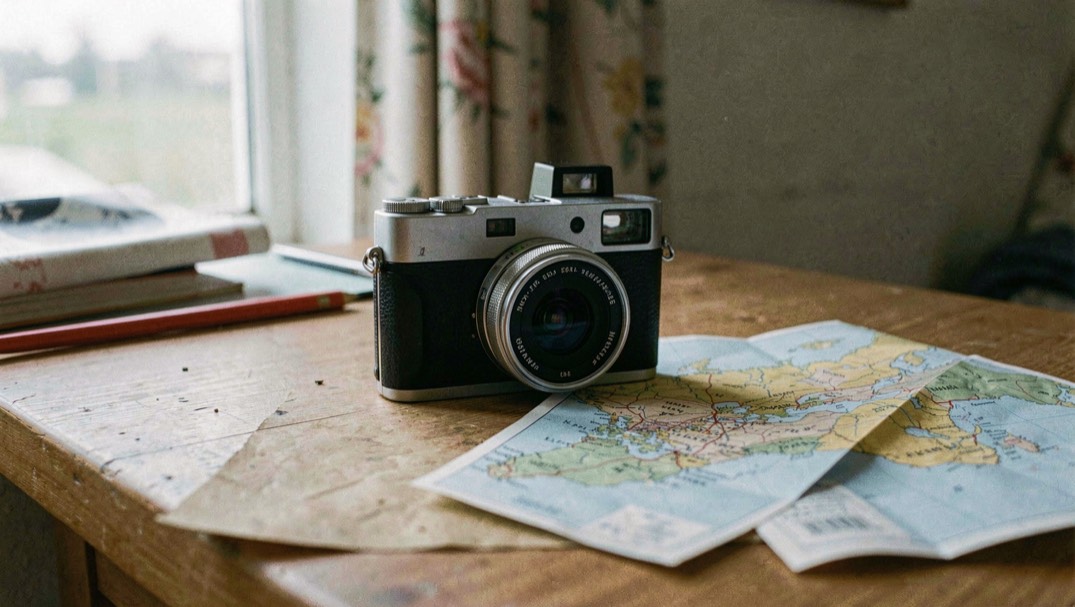
Write down a wide establishing frame, a human-scale detail, a transition and a quiet end-of-day image. These jobs produce a sense of place even when the famous view is crowded.
Choose the lens that removes friction
A single flexible lens can be more useful than a heavy collection when the work involves walking, weather and changing distances. The best choice is the one you will actually carry.
Leave one blank line
A shot list should reserve space for something you could not have planned. That blank is where the trip can surprise the photographer.
A list with room for surprise
Write a short travel list around visual jobs: one establishing frame, one human-scale frame, one detail, one transition and one ending. These prompts are lighter than a list of landmarks because they can be fulfilled in a market, on a train platform or beside a rented room. Choose a lens that supports those jobs and carry it for a full walk before adding anything else.
A list of visual jobs also leaves room for the references a photographer carries. Some of those references come from animation. A documentary site in Italian, Fermo Immagine, covers classic anime and manga from the 1970s to 2000 and how they reached Italy: dubbing, studios and voices, television adaptations, Star Comics albums, censorship and broadcast memory. It also explains shonen, shojo and seinen, super robot and real robot, cyberpunk and OAV, and the difference between anime and a cartoon. Reading it before a trip can sharpen an eye for framing, colour and sequence without adding weight to the bag.
The failure mode is confusing coverage with completion. A trip is not better because every line on a list has a tick beside it. Leave one blank line for a photograph that the place offers unexpectedly. Protect time for looking without the camera. When the kit is small, the photographer can pay attention to sound, weather and people rather than spending the day managing objects. That attention is often what makes the travel set feel coherent.
A light kit is decided by the conditions, and packing for the conditions covers what to protect and what to leave behind.
Keep a field record
At the end of the day, sort the images by the visual job they perform rather than by the place name alone. A set with five landmarks may still feel empty, while a set with a departure, a working hand, a local detail, a pause and a return can carry the shape of a journey. This method helps when the trip produces too many similar frames. It gives editing a narrative question and leaves the photographer free to make photographs that were never on the list.
Know the limit
A small kit does not mean every photograph must look the same. Change distance, wait for a different layer of light and use the environment as a modifier. A compact camera with one lens can produce wide context, a close detail and a portrait if the photographer moves. The limit appears when a missing focal length would change the assignment rather than merely add variety. Decide that before leaving. Rent only the item that solves the missing picture, and keep the rest of the day light enough to notice what is around you.
Example from the field
Example: on a two-day trip, use the same lens for a ferry departure, a shopkeeper’s hands and a wide street at dusk. Change your position and wait for the light rather than changing the kit. If the list lacks a close detail, move closer. If the list lacks a human scale, wait for a person to enter. The exercise reveals whether the missing image is truly equipment-related or simply a matter of attention and timing.